From the Shoreline to the Plate: Why Seaweed Is the Ingredient Coastal Chefs Can't Stop Talking About
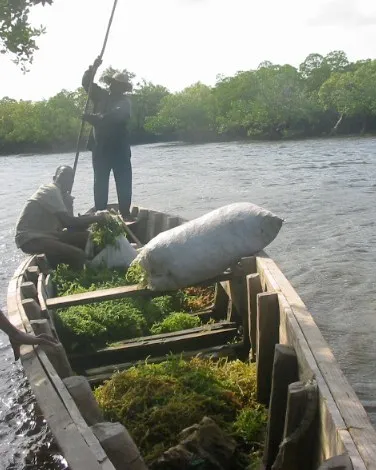
Photo: USAID Africa Bureau, Public domain, via Wikimedia Commons
There's a moment every summer when you wade into the Atlantic or duck under a Pacific wave and come face-to-face with a long, slippery ribbon of kelp. Most of us shake it off and keep swimming. But a growing number of people along America's coasts are wading in with a different mindset entirely — and a harvest bag.
Seaweed has quietly become one of the most talked-about ingredients in American coastal cooking, and it's not hard to see why. It's sustainable, nutrient-dense, deeply flavorful, and — maybe most importantly — it's right there, growing wild in the waters that define so much of our culinary identity. The question is no longer whether seaweed belongs on the plate. It's how we got to this point, and where it's all heading.
The Foragers Leading the Charge
Along the rocky shores of Maine, the kelp forests of Northern California, and the tidal flats of the Pacific Northwest, a loose but passionate community of wild harvesters has been quietly building something remarkable. These aren't back-to-the-land hobbyists — many are running serious small businesses, supplying high-end restaurants, and rethinking what it means to eat from the ocean.
Take the Maine coast, which has become something of a ground zero for American seaweed culture. The cold, nutrient-rich waters off Downeast Maine produce some of the most robust wild seaweed in the country. Harvesters there have been gathering species like dulse, bladderwrack, and rockweed for years, but the audience for their work has exploded in the past decade as chefs started paying attention.
In California, the picture looks a little different. Coastal foragers there work within a patchwork of state regulations — harvesting limits, permitted zones, seasonal windows — that keep the practice sustainable but also require real knowledge and commitment. The reward is access to species like bull kelp and sea lettuce that bring a briny, mineral intensity to food that's genuinely hard to replicate any other way.
What These Ingredients Actually Taste Like
Here's the thing that surprises most people when they first cook with seaweed: it doesn't taste like the ocean in a blunt, fishy way. It tastes like the idea of the ocean — clean, complex, and deeply savory in a way that's hard to pin down until you realize you're chasing that umami thread.
Dulse, for example, has a smoky, almost bacon-like quality when pan-fried. It's been used in Irish and Icelandic cooking for centuries, but American chefs are finding new applications — crumbling it over clam chowder, folding it into butter, or crisping it up as a garnish for raw oysters. Sea lettuce is brighter and more delicate, lending itself to salads, light broths, and finishing touches that need a pop of color and a whisper of brine.
Kelp might be the most versatile of the bunch. Dried and ground, it functions almost like a seasoning — adding depth to rubs, stocks, and compound butters without announcing itself too loudly. Fresh, it can be blanched and used like a leafy green, or sliced thin and dressed simply with rice vinegar and sesame. Some chefs are even experimenting with kelp noodles as a genuinely compelling alternative to pasta in seafood-forward dishes.
The Farm Side of the Story
Wild harvesting is only part of the picture. Seaweed aquaculture — the cultivation of marine plants in controlled or semi-controlled ocean environments — has been growing steadily along US coasts, and it's starting to reach a scale where it can meaningfully supply restaurants and retailers.
Kelp farming in particular has drawn serious investment and attention, partly because of its environmental profile. Kelp doesn't require freshwater, fertilizer, or feed. It absorbs carbon dioxide and excess nitrogen from the water as it grows, which means a well-managed kelp farm can actually improve local water quality. In an era when the environmental cost of everything on the menu is fair game for scrutiny, that's a genuinely compelling story.
Small operations in Maine, Washington, and Alaska have been refining their methods for years, and a handful of larger players are now starting to emerge. The challenge, as with so many things in the food world, is connecting production to demand in a way that works economically. Seaweed is still relatively unfamiliar to most American home cooks, which means the restaurant world is doing a lot of the heavy lifting when it comes to building an audience.
How Restaurants Are Making It Work
The chefs who've embraced seaweed most enthusiastically tend to share a particular sensibility — they're interested in place, in provenance, and in the idea that a menu should reflect the specific coastline it's rooted in. Seaweed fits that philosophy almost perfectly.
In Portland, Maine, restaurants have been building relationships with local harvesters for years, incorporating seaweed into everything from charcuterie boards to house-made pasta. In San Francisco, the proximity to Pacific kelp forests has inspired chefs to experiment with fermented seaweed condiments and kelp-based broths that anchor entire tasting menu courses. On the Gulf Coast, where the seaweed tradition is less established, a few forward-thinking kitchens are starting to explore what local species might bring to dishes that have long been defined by shrimp, crab, and oysters.
What's interesting is how naturally seaweed pairs with the rest of the coastal pantry. The brininess amplifies shellfish without overwhelming it. The umami depth works beautifully alongside fish that might otherwise taste a little flat. And the visual drama — those deep greens, the translucent ribbons, the dark crimson of dried dulse — gives chefs a tool that's as useful aesthetically as it is culinarily.
A New Definition of Seafood
For a long time, the American idea of seafood has been pretty narrowly defined — fish, shellfish, maybe the occasional sea urchin if you're feeling adventurous. Seaweed challenges that definition in a quiet but meaningful way. It's not a protein, it's not a catch, and it doesn't fit neatly into the frameworks we've built around ocean food. But it comes from the same water, carries the same sense of place, and tells the same story about the coastlines we love.
The foragers and farmers driving this movement aren't trying to replace anything. They're adding a layer — deepening the conversation about what it means to eat from the sea. And honestly? If the result is more dulse butter on more oysters at more coastal restaurants across the country, that's a revolution worth wading into.