Shell Game: The Small Oyster Farms Rewriting America's Coastal Food Story
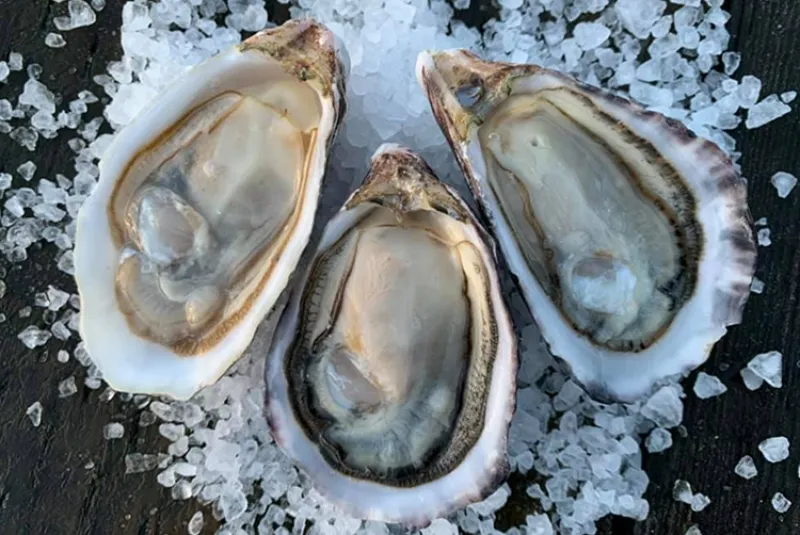
Photo: oyster farm tidal flat Maine workers harvesting cages, via media.fisheries.noaa.gov
There's a moment that happens at almost every raw bar worth its salt. You set down a half shell, close your eyes, and for just a second you can actually taste where you are. A cold Atlantic cove. A Pacific estuary at low tide. A Chesapeake inlet in October. That experience — intensely local, completely unrepeatable anywhere else — is exactly what's driving one of the most exciting food stories on the American coast right now.
Oyster farming in the United States has undergone a full-scale reinvention over the past two decades, and the results are showing up everywhere from white-tablecloth restaurants in coastal resort towns to weekend farmers markets a short drive from the water. It's not just a food trend. It's a genuine cultural shift, and it's worth understanding what's actually happening out there on those tidal flats.
How We Got Here
For most of the 20th century, oysters were a story of decline. Overharvesting, pollution, and habitat loss gutted wild oyster populations along every major American coastline. The Chesapeake Bay — once so thick with oysters that colonial-era accounts describe ships running aground on reef systems — saw its native Crassostrea virginica population crash to a fraction of historic levels. The Pacific Northwest told a similar story.
What changed things wasn't a single policy or a single moment. It was a generation of coastal residents who looked at degraded waterways and saw possibility instead of loss. Starting in the 1980s and accelerating through the 2000s, small aquaculture operations began staking out leases on tidal flats and estuaries, raising oysters in floating cages and mesh bags rather than relying on dwindling wild stocks. The results have been remarkable.
Today, the United States is home to hundreds of independent oyster farms spread across more than a dozen coastal states. And unlike the commodity shellfish industry of earlier eras, these operations are deeply invested in place, flavor, and identity.
The Terroir of the Tidal Flat
Wine drinkers have long understood that soil, climate, and geography shape flavor in ways that can't be faked. Oyster farmers have been making the same argument for years, and the culinary world is finally listening.
The concept of merroir — a riff on terroir applied to the sea — describes how salinity, water temperature, mineral content, and the specific organisms an oyster feeds on all combine to create a flavor profile unique to a particular body of water. A Pemaquid oyster raised in the cold, clean tidal rivers of midcoast Maine tastes nothing like a Hog Island Sweetwater from Tomales Bay in California. Both are exceptional. Neither could exist anywhere else.
This specificity has been a gift to American dining culture. Chefs who once ordered generic "oysters" by the case now curate raw bar menus the way sommeliers curate wine lists — choosing varieties for contrast, progression, and regional storytelling. A well-composed raw bar plate has become one of the most genuinely expressive things a coastal restaurant can offer.
Environmental Upside
Beyond flavor, there's a compelling ecological argument for supporting oyster aquaculture. Oysters are filter feeders, meaning each adult bivalve can cycle up to 50 gallons of water per day, pulling out excess nitrogen, phosphorus, and particulate matter in the process. In estuaries stressed by agricultural runoff and development, working oyster farms provide measurable water quality benefits.
Organizations like the Chesapeake Bay Foundation and The Nature Conservancy have partnered with small farms to use oyster aquaculture as a restoration tool, not just a food production method. In parts of Virginia and Maryland, the return of farmed oyster populations has been linked to improved water clarity and the recovery of underwater grasses that other species depend on.
It's a rare situation in modern food production where eating the thing actually helps the ecosystem it came from.
A Regional Guide to the Oyster Trail
If you want to connect more directly with where your oysters come from, the good news is that farm visits and farm-adjacent dining have never been more accessible. Here's a starting point by region.
Maine and New England Midcoast Maine is ground zero for the American oyster renaissance. The Pemaquid Oyster Company in Bristol, Maine, welcomes visitors during the warmer months and offers a direct look at how cage-raised oysters are tended through the tidal cycle. Further south, Island Creek Oysters in Duxbury, Massachusetts has built an entire hospitality ecosystem around its farm, including a Boston restaurant that keeps the supply chain almost comically short.
The Chesapeake Bay Virginia's Eastern Shore has become a hotbed of oyster aquaculture, with operations like Rappahannock Oyster Co. offering tours of their Topping, Virginia farm alongside a waterside restaurant experience that's worth the drive from Richmond or D.C. The flavor profile here — briny, with a clean mineral finish — reflects the Bay's complex mix of fresh and salt water.
The Gulf Coast Louisiana and the Florida Panhandle don't always get the attention they deserve in oyster conversations, but the Gulf offers a completely different flavor experience: plumper, milder, with a sweetness that reflects warmer, shallower growing conditions. Apalachicola Bay in Florida has its own storied oyster culture, though the fishery has faced significant challenges in recent years that local advocates are working hard to address.
The Pacific Northwest Washington State is the oyster powerhouse of the West Coast, producing the majority of the country's farmed oysters. The Willapa Bay and Hood Canal regions host dozens of operations, many of which sell directly to the public. Taylor Shellfish Farms operates retail locations in Seattle where you can pick up live oysters, clams, and geoduck with the same ease you'd grab groceries. Kumamoto oysters — petite, deeply cupped, with a sweet and fruity flavor — are a Pacific Northwest specialty worth seeking out specifically.
Getting to the Table
You don't have to drive to a tidal flat to participate in this story. Farmers markets in coastal cities increasingly feature direct-from-farm oyster vendors. Many small operations ship overnight directly to consumers, and the quality of properly packed live oysters arriving at your door can be genuinely impressive.
When you're buying, ask questions. A good seafood counter or online retailer should be able to tell you exactly where the oysters were grown, when they were harvested, and how to store them properly at home (flat side up, in the fridge, covered with a damp cloth — they'll keep for a week if they were fresh to begin with).
The oyster renaissance is, at its core, a story about reconnecting food to place. Every shell carries an address. The more you pay attention to that address, the more interesting your table gets.